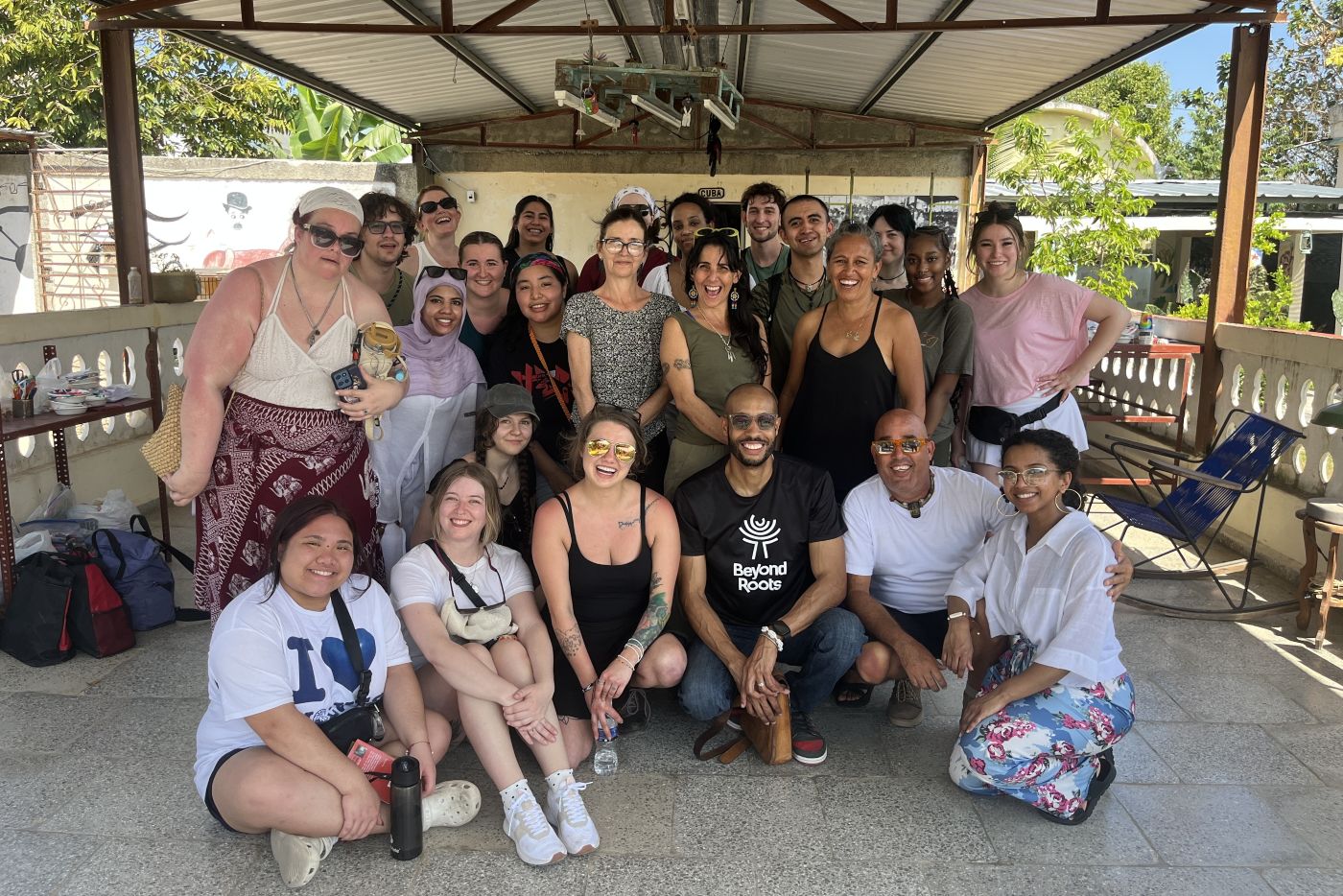
For the third year in a row, Normandale Community College offered a Travel and Learn Intercultural Communication Class that traveled to Cuba. Normandale student Dija Wando received scholarship funding for a study abroad opportunity, and was able to take the course and travel to Cuba in March 2026. Wando shared her experiences from the course and the trip to Cuba.
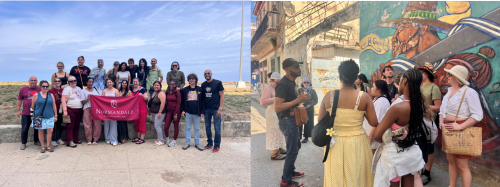
Why is Study and Learn important?
“Study and Learn is important because we are able to put what we learn in the class to practice. For example, in the intercultural communication course we covered cultural shock and cultural competence we learned the importance of having the knowledge., Skills and motivation to reach unconscious competence. To put that in practice. We learned about prejudice, stereotypes, and discrimination. That can hinder us. Unconsciously comp where we are able to without casting judgment on others because of our differences.”
What were some of the things you learned about Intercultural Communication and Cuba through the Travel and Learn course?
“In our Intercultural Communications course time, I learned about the building blocks that make up culture and it helped me understand why culture shock occurs. This gave me helpful resources to reduce cultural shock before and during our visit to Cuba.
Learning about the Taino and Ciboney indigenous groups as well as the enslaved Africans history in Cuba, I now understand why certain indigenous and African practices are an influential part of the culture. I learned about Cuban, specifically Afro-Cuban perspectives on history, the revolutions and the public sentiment towards the US due to the US's interventions and the embargo.
I also learned how everyday common behaviors and activities play an important role in continuing tradition and culture, and how we take them with us when we move from culture to culture.
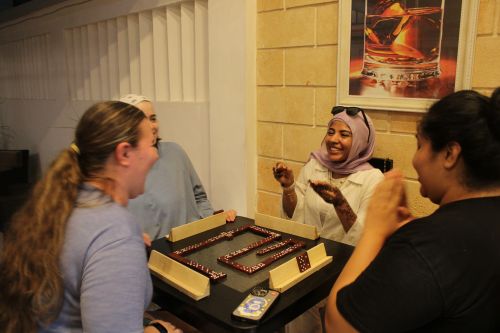
This made me curious about whether Cuban social practices and norms are generally more similar to American or Middle Eastern culture. In my family, meals brought us together and strengthened our bond, and I learned that games also play an important role in strengthening connections in Cuban culture, like dominoes. Since dominoes are an integral part of daily life in Cuba, I read about and watched videos to learn the rules of Cuban dominoes. I was able to participate, build connections with locals, and play many rounds of dominoes!
I also learned how everyday common behaviors and activities play an important role in continuing tradition and culture, and how we take them with us when we move from culture to culture.”
 How does what I learned tie in to culture?
“Learning that Cuba is a direct and high-context culture showed me the similarities between Cuban culture to American culture (direct), and Cuban culture to Middle Eastern culture (high-context). I came away from this unit wanting to learn more about Cuban slang, how the Cuban dialect influences how Cubans think, and nonverbal communication patterns used in Cuba. Doing some independent research, I learned some common Cuban slang words: asere (buddy/friend), estar arriba de la bola (to stay on top of things), pinchar (to work/job), and jamar (to eat). I also specifically tried to learn some common nonverbal gestures and practiced Cuban Spanish slang (when appropriate) so when we were in Cuba, I better understood what someone was trying to communicate to me and vice versa.”
Learning about Cuban Food, Sports, Games, Music
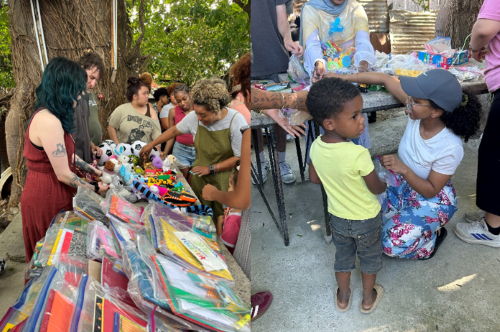
Learning more about the turmoil and struggles that the Cuban people face every day especially after the Covid pandemic really stood out to me. It made me think about the various influences that other governments, and specifically the relationship with the US government, have had on this island. The Cuban people are very resilient and you can see that in all of the content from this unit. From the food that is used in everyday meals—what’s commonly found on the island from the roasted pig, rice, sugar, and beans.
Baseball is played and enjoyed by everyone on an amateur and professional level, and music has also seeped its way into it. Similarly during a game of dominoes, it is clear that these activities not only teach teamwork and strategy, but also strengthen bonds and community. And how anyone can join even if they’re not Cuban or if they don’t speak Spanish. Once again, we can tie this back to previous units where we learned about nonverbal communication. The use of music, drumming, and dancing during baseball events is a great example of this.
One thing that surprised me was how everyday activities like dominoes and baseball are shaped by real life conditions. I didn’t expect something as simple as a board game to reflect something as complex as infrastructure failure. That impacts me because when we visited Cuba, I wanted to be more aware that even small interactions are connected to something larger. Even if someone just wants to play baseball or listen to music, they’re still shaped by policy, and history. As we continue to learn history and how it impacts today, I want to have these discussions in Cuba respectfully and listen to the people. I wanted to make sure I heard what Cubans had to say about the current state and bring that perspective back with me when I returned.
Afro-Cuban Culture, History, and Influence on Cuban Music and Dance
Practices of Santeria and the Dance of the Orisha
Santeria-Orish Dance
“One of the main things that I found interesting was the spiritual practices that derived from Africa when enslaved peoples were forcibly brought over to labor in Cuba. What really surprised me was the large number—between 700,000 to 1,000,000 enslaved people. Seeing that number made everything feel more real and heartbreaking. It is hard to imagine hundreds of years of being taken away from your home and forced to work long hours under the hot sun. Despite all of this suffering, the fact that African people were still able to have such a deep and lasting influence on Cuban culture is something I find beautiful and powerful.
I was especially intrigued by the influence of the Yoruba people and how their beliefs shaped religious life in Cuba, particularly through Santería. I remember once taking an Afro-beats dance class, and afterwards we decided to eat at a restaurant near the studio. I had a conversation with the waiter, who was from Cuba. He told me more about the African influence there, especially West African influence, and I found it fascinating at the time. This unit helped me understand it on a deeper level. I remember him explaining how he attended Catholic church, but also participated in communal activities connected to the orishas. Learning how enslaved Africans blended their spiritual practices with Catholicism in order to preserve their traditions made that conversation make so much more sense to me now.
I enjoyed trying different African-inspired Cuban dishes like Ropa Vieja and Quimbombó. As an African myself, I grew up eating okra cooked with spices, onions, and tomatoes, so learning that okra is also commonly eaten in Cuba because of African influence made me feel connected to the culture in a personal way.
Overall, this course's content solidified for me that painful things can happen, but culture can still survive and evolve into something treasured around the world, like Afro-Cuban music, food, art, and spiritual practices. It reminded me of the strength and resilience of African people and made me feel even more connected to that shared history."
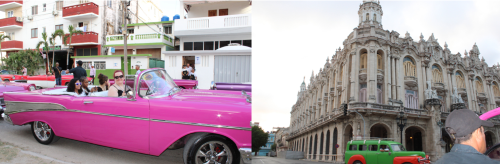
How much did it mean to you that you were given this opportunity through scholarship?
“I’m beyond grateful to have received scholarships to be able to study abroad in Cuba. I want to express my gratitude to the start your journey foundation, Normandale Academic travel scholarship and the Gilman scholarship. Without their support, academic travel would not have been a possibility for me. I’m currently working part-time to be able to attend college and don’t receive a lot of familial financial support. Without the generous support of donors I wouldn’t have incredible classmates, and instructors, learning about Afro Cuban culture and making connections with many wonderful people who helped me practice my Spanish-speaking skills and strengthen my understanding of the different regions of Cuba that might have been forgotten.
Most of all, creating an opportunity to build relationships and navigate all the ups and downs of travel. Being able to simply focus on the course and preparing of the amazing opportunity to visit Cuba is an experience where I cannot express how thankful I am.
I know the study abroad perspectives that TRIO students like myself can get from these experiences from these scholarships are a great opportunity. To be able to have these opportunities and not have to worry about the finances is really amazing, and I am so appreciative of it. I now know that study abroad is an achievable goal.”
 top
top